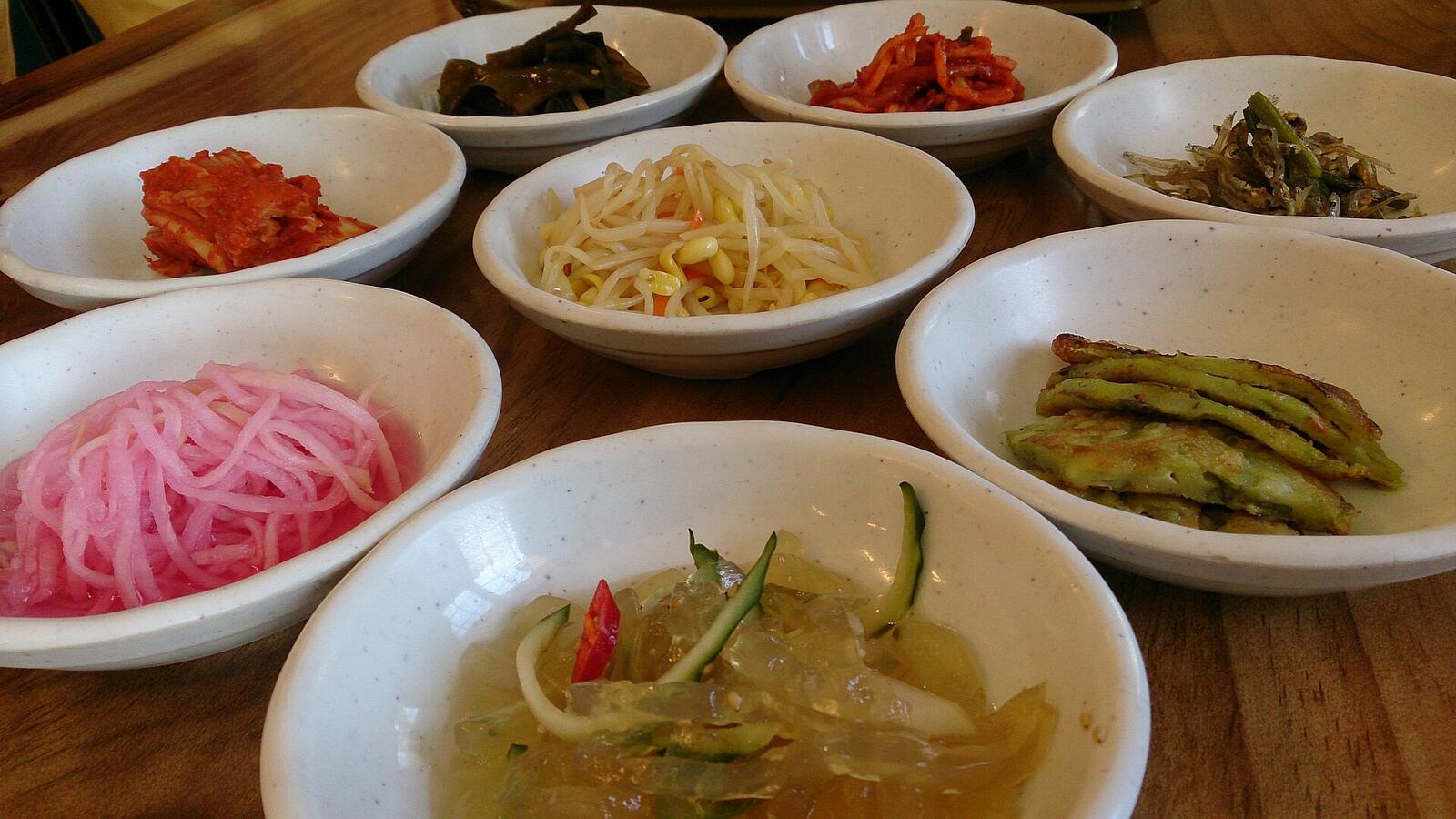
Order a bowl of stew in Seoul and the table fills with small plates before it arrives: kimchi, seasoned spinach, bean sprouts, pickled radish, maybe a rolled omelette. These are banchan, and they refill for free.
Where it comes from
Banchan grew out of a rice-centred table where vegetables, many preserved for winter, did much of the work. Kimchi is the best known, and the autumn tradition of families making it together, kimjang, is on UNESCO’s list of intangible cultural heritage.
Seeing it as a traveller
Any neighbourhood baekban (home-style set meal) restaurant serves a generous spread. In Seoul, Gwangjang Market is a good place to see banchan made and sold by the tub, and temple-food restaurants serve vegetarian versions without garlic or onion.
Why it may help
A banchan spread puts several vegetables on the table at every meal, in small amounts, with different textures and flavours. Fermented foods like kimchi are being studied for how they interact with gut bacteria.
Try it at home: your first week
- Day 1Make one side
Blanch spinach, squeeze it dry and toss with sesame oil, salt and a little garlic.
- Day 3Add a pickle
Slice a cucumber thin, salt it for ten minutes, then dress with rice vinegar and chilli.
- Day 7Set a small table
Serve three small sides next to every main meal this week. Refill as you go.
This page is general information, not medical advice. If you have a health condition, check with your doctor before changing your diet, exercise or routine.